Car Won't Start: Battery or Alternator Trouble?
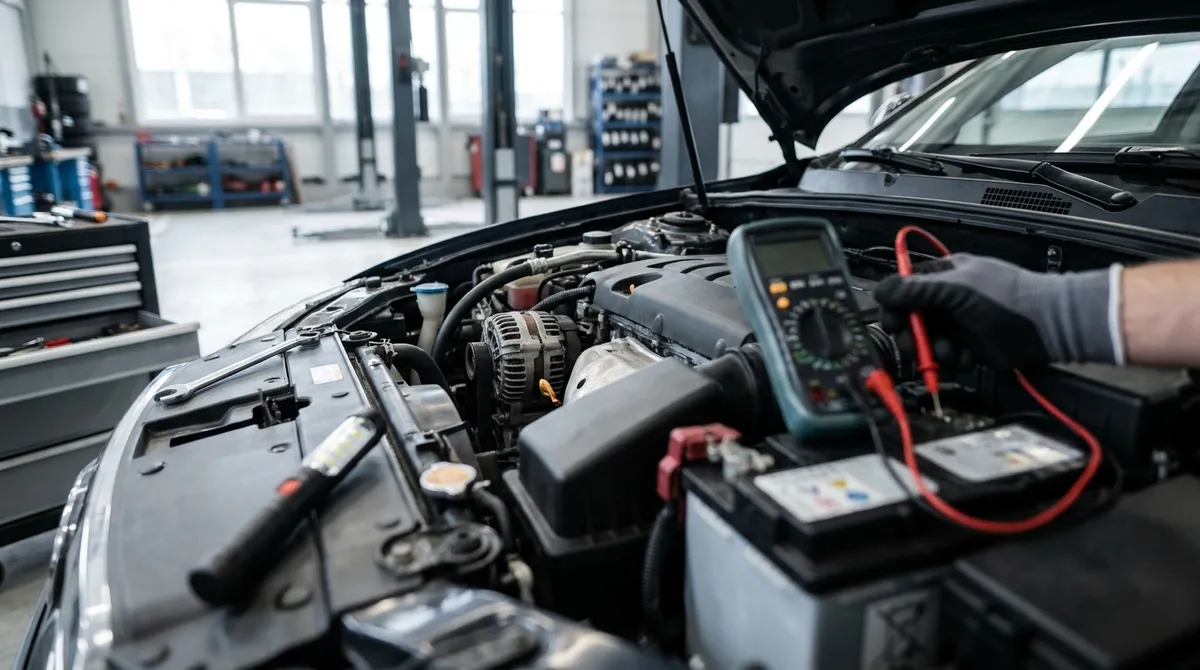
A dead car is a pain, especially when you’re in a hurry. Usually, when your engine won’t crank, it’s either the battery or the alternator that’s acting up. Knowing which one is the culprit saves you time and keeps you from throwing parts at the problem. Let’s figure out what’s going on under the hood.
Is It Just a Dead Battery?
A dead battery is often the easiest problem to spot. Your car’s electrical system needs a certain amount of juice to get the engine cranking, and if it’s not there, nothing happens.
Common Symptoms of a Dead Battery:
- No lights or very dim lights: When you try to turn on the headlights or interior lights, they’re either completely off or barely glowing.
- A single, slow click: You turn the key, and you hear one distinct “clunk” from under the hood, but the engine doesn’t turn over.
- Rapid clicking: This means the battery has just enough power to engage the starter solenoid, but not enough to actually spin the engine.
- Slow cranking: The engine tries to turn over but sounds sluggish, like it’s struggling, before giving up.
- Nothing at all: You turn the key, and you get complete silence.
What to Check First:
- Battery Terminals: Pop the hood and take a look at the battery terminals. Are they covered in white, green, or blue corrosion? Are they loose? A bad connection can act exactly like a dead battery. Clean them up with a wire brush and make sure the nuts are tightened down properly.
- Voltage Test (Engine Off): Grab a multimeter. Set it to DC volts (usually marked with a “V” and a straight line). Touch the red lead to the positive (+) terminal and the black lead to the negative (-) terminal. A fully charged battery should read around 12.6 volts. If it’s much lower, say 12.0V or less, it’s pretty drained.
Next Steps: If the terminals are clean and tight, and the voltage is low, try a jump start. If the car starts and runs fine after a jump, and continues to start fine for a few days, the battery was likely just discharged or is getting old. You can find more general troubleshooting tips in our symptom guides.
Or Is the Alternator Giving Up?
The alternator’s job is to generate electricity to power your car’s electrical systems and recharge the battery while the engine is running. If it’s failing, your battery won’t get topped off, and eventually, the car will die.
Common Symptoms of a Failing Alternator:
- Car dies shortly after a jump start: This is a classic sign. The battery had enough power to start, but the alternator couldn’t keep it running.
- Dimming headlights or interior lights while driving: As the alternator struggles, the electrical system gets less power.
- Dashboard warning lights: The battery warning light (often looks like a little battery icon) is the most obvious. Other lights like ABS or airbag warnings might also come on as voltage drops.
- Electrical accessory issues: Your radio might cut out, power windows might move slowly, or your heated seats might stop working.
- Whining noise: Sometimes a failing alternator will make a whining or grinding noise, especially as it gets worse.
What to Check First:
- Voltage Test (Engine Running): After you’ve got the car running (maybe with a jump), keep the multimeter hooked up to the battery terminals. The voltage should now read between 13.5 and 14.7 volts. If it’s still around 12.0-12.6V, or even dropping, the alternator isn’t doing its job.
- Check the Belt: The serpentine belt drives the alternator. Make sure it’s not broken, loose, or glazed (shiny). A slipping belt won’t let the alternator spin properly.
Next Steps: If your alternator isn’t charging, it’s usually time for a replacement. Most auto parts stores can test your alternator off the car, or even on the car if you drive it in. Sometimes, a bad voltage regulator (often built into the alternator) is the culprit. Our fix database has details on common repairs.
The Jump Start Test: The Quick Decider
This is the simplest way to get a good idea of what’s going on with your charging system.
- Try to start the car. Note what happens (click, slow crank, nothing).
- Jump start the car. If it starts, let it run for 15-20 minutes.
- Turn the car off.
- Try to start it again.
- If it starts right up: Good chance it was just a dead battery, or maybe something was left on. Drive it for a while to let the alternator fully charge it, or put it on a trickle charger overnight.
- If it won’t start again, or struggles: The alternator is probably not charging the battery. The jump start got enough juice in the battery to crank, but the alternator couldn’t keep it topped off.
Another tell-tale sign of an alternator problem is if the battery warning light (often looks like a little battery icon) comes on while you’re driving. That light means the charging system isn’t working right. If you’re unsure, our AI Mechanic can walk you through more specific checks for your vehicle.
Don’t get stuck guessing. A few simple checks with a multimeter can save you a tow or an unnecessary parts purchase. If your battery is old (usually 3-5 years), it’s a good candidate for replacement. If the alternator is the problem, it’s a job that needs to be handled to keep your car running. When in doubt, or if you’re not comfortable with electrical work, it’s always best to take it to a trusted shop.