Water Pump Replacement Cost: $400–$800 at a Shop vs. DIY
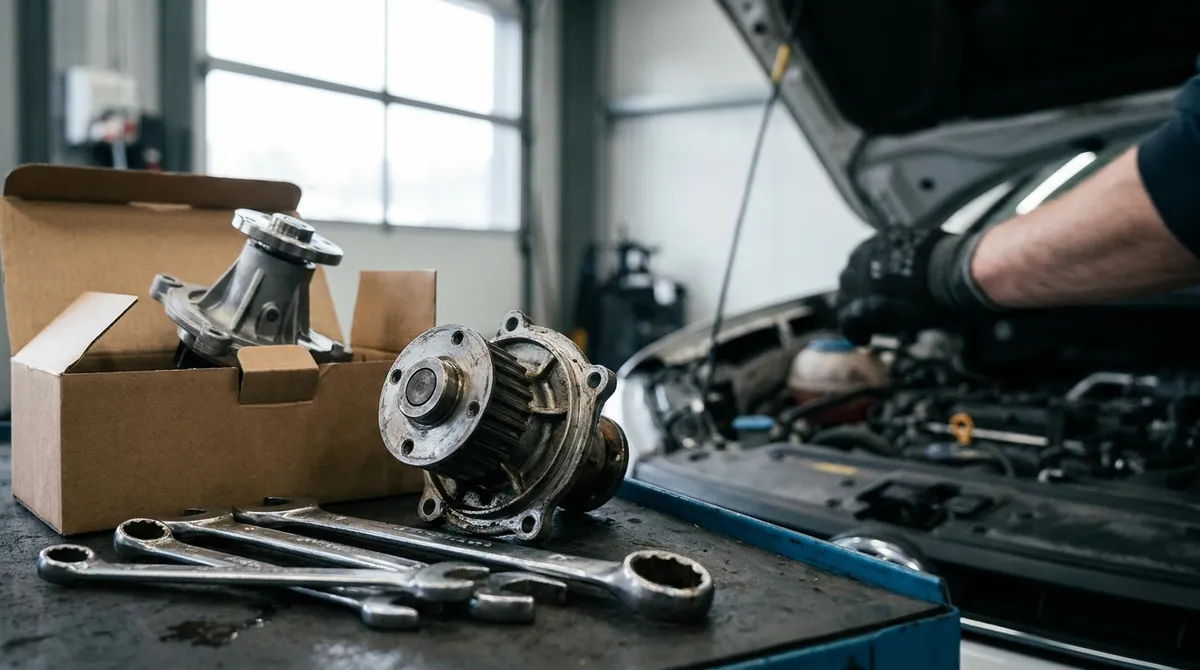
A leaking or failing water pump is a common problem that can quickly lead to your engine overheating. When it happens, you’re faced with a choice: tackle the repair yourself or take it to a professional shop. Understanding the costs involved for both options can help you decide the best path for your wallet and your wrenching skills.
What Does a Water Pump Do?
Your engine’s cooling system relies on the water pump to circulate coolant through the engine block, cylinder head, and radiator. It’s essentially the heart of the cooling system, pushing hot coolant out to the radiator to cool down and bringing cooler fluid back into the engine. When it stops doing its job, heat builds up, and that’s bad news for engine components.
Common signs of a failing water pump include coolant leaks (often a puddle under the front of the car), a whining or grinding noise from the front of the engine, or your engine temperature gauge climbing higher than normal. If you notice any of these, it’s time to investigate before you end up stranded. You can learn more about how to pinpoint common issues by checking out our symptom guides.
DIY Water Pump Replacement Costs
If you’re comfortable with a wrench and have some experience under the hood, replacing a water pump yourself can save you a good chunk of change on labor. But it’s not just the cost of the part; you need to factor in tools, time, and the potential for unexpected headaches.
- Parts:
- Water Pump: A new water pump can range from $50 to $300, depending on your vehicle’s make and model. Some high-end or specialized pumps might cost more.
- Gaskets and Seals: These usually come with the new pump, but it’s worth checking. If not, add $10-$30.
- Coolant: You’ll need to drain and refill the cooling system, so plan on buying 1-2 gallons of the correct type of coolant for your vehicle, typically $15-$30 per gallon. Don’t cheap out here; using the wrong coolant can cause more problems down the road.
- Other Components: Depending on your car, the water pump might be driven by the serpentine belt or the timing belt. If it’s the timing belt, it’s often smart to replace the timing belt, tensioner, and idler pulleys at the same time, as the labor to get to them is already done. This can add $100-$400 for the timing belt kit. If you’re unsure when your timing belt was last replaced, it’s a good idea to consider it. We’ve got a detailed breakdown on when to replace a timing belt or chain.
- Tools:
- Basic hand tools (sockets, wrenches, screwdrivers) are a given.
- You might need specialized tools like a pulley puller, torque wrench, or specific pliers for hose clamps. If you don’t own these, consider the cost of buying or renting them.
- A drain pan for coolant is essential.
- Time: This isn’t a 30-minute job. Depending on the vehicle and your experience, a water pump replacement can take anywhere from 3 hours to a full day, or even longer if you hit unexpected snags like rusted bolts or hard-to-reach components.
DIY Total Estimate: Expect to spend roughly $100-$700 on parts and supplies, not including any specialized tools you might need to buy.
Mechanic Shop Water Pump Replacement Costs
Taking your car to a professional mechanic means paying for their expertise, specialized tools, and the warranty on their work. While it’s more expensive upfront, it often comes with peace of mind.
- Parts: A shop will typically charge you a bit more for the parts than you’d pay at a retail parts store. This covers their overhead, ordering, and inventory. Expect a 10-25% markup on the part itself.
- Labor: This is where the bulk of the cost comes in. Water pump replacement is usually a flat-rate job, meaning shops use a standardized labor guide (like Alldata or Mitchell) to determine how many hours the job should take.
- Labor times can range from 2-3 hours for easily accessible pumps to 6-8 hours or more for pumps buried deep in the engine (like on some V6 or V8 engines, or those driven by timing belts).
- Shop labor rates typically run from $100 to $175 per hour, sometimes higher in metropolitan areas.
- Other Costs: Shops will also charge for coolant, shop supplies (rags, cleaners, disposal fees), and possibly a diagnostic fee if they had to confirm the issue.
Shop Total Estimate: For most vehicles, you can expect to pay anywhere from $400 to $800 for a water pump replacement. For more complex jobs involving timing belts or difficult access, the cost can easily climb to $1,000-$1,500 or more.
If you want a clearer picture for your specific vehicle, the MECH AI app can help you get an estimate of common repair costs. Just ask the AI Mechanic about your car’s make and model.
When to DIY and When to Go to a Shop
The decision often comes down to a few factors:
- Your Skill Level and Tools: If you’ve done significant car repairs before and have a well-stocked toolbox, a water pump might be a manageable job. If you’re new to serious engine work, this might not be the best first project, especially if the pump is hard to reach.
- Time: Do you have a full day or weekend to dedicate to the repair? Rushing a water pump replacement can lead to mistakes.
- Vehicle Complexity: Some vehicles have water pumps that are notoriously difficult to access, requiring removal of multiple components, engine mounts, or even special engine positioning. Research your specific vehicle’s procedure before diving in.
- Warranty: A professional repair usually comes with a warranty on both parts and labor, typically for 12 months or 12,000 miles. If something goes wrong, they’ll fix it. DIY repairs don’t offer that safety net.
Ultimately, whether you choose to replace your water pump yourself or take it to a shop, the most important thing is to get it fixed promptly. An overheating engine can lead to much more expensive repairs, like a blown head gasket or a cracked block. Don’t let a small leak turn into a major engine rebuild. You can always check our fix database for more general repair information and tips.
Sources
- Gates Corporation — Timing Belt Replacement Interval Guide (belt-driven water pumps are replaced with the timing belt)
- AAA — Car Overheating: 8 Causes and Solutions (water pump and serpentine belt failure modes)
- U.S. Federal Trade Commission — Auto Repair Basics (flat-rate labor pricing and written estimates)
- ASTM D3306 — Standard Specification for Glycol Base Engine Coolant for Automobile and Light-Duty Service